Photo: Deb Jones / LuxuryEurope Commissions may be earned from LuxuryEurope’s affiliate partner links
The plan was simple enough. Fly to Lisbon for an evening at the Coliseu dos Recreios to see Ludovico Einaudi play solo piano, and head home. That was the original idea. What actually happened, once I looked at the city map and the flights, was that one concert could be turned into a five-day adventure exploring one of the most exciting cities in Europe.
What I didn’t expect was just how easy it was to include Lisbon’s top attractions in my concert planning. Five days proved long enough to walk the old quarters like the Alfama District, ride the trams, enjoy the city’s food and drink scene… and still have time for a day trip out to Sintra and the cliffs at Cabo da Roca.
Yes, the concert was the main event. But Lisbon was the real star of the show. Here’s what I did on my five days in Lisbon during my concert-going adventure.
An Airbnb Base in Chiado
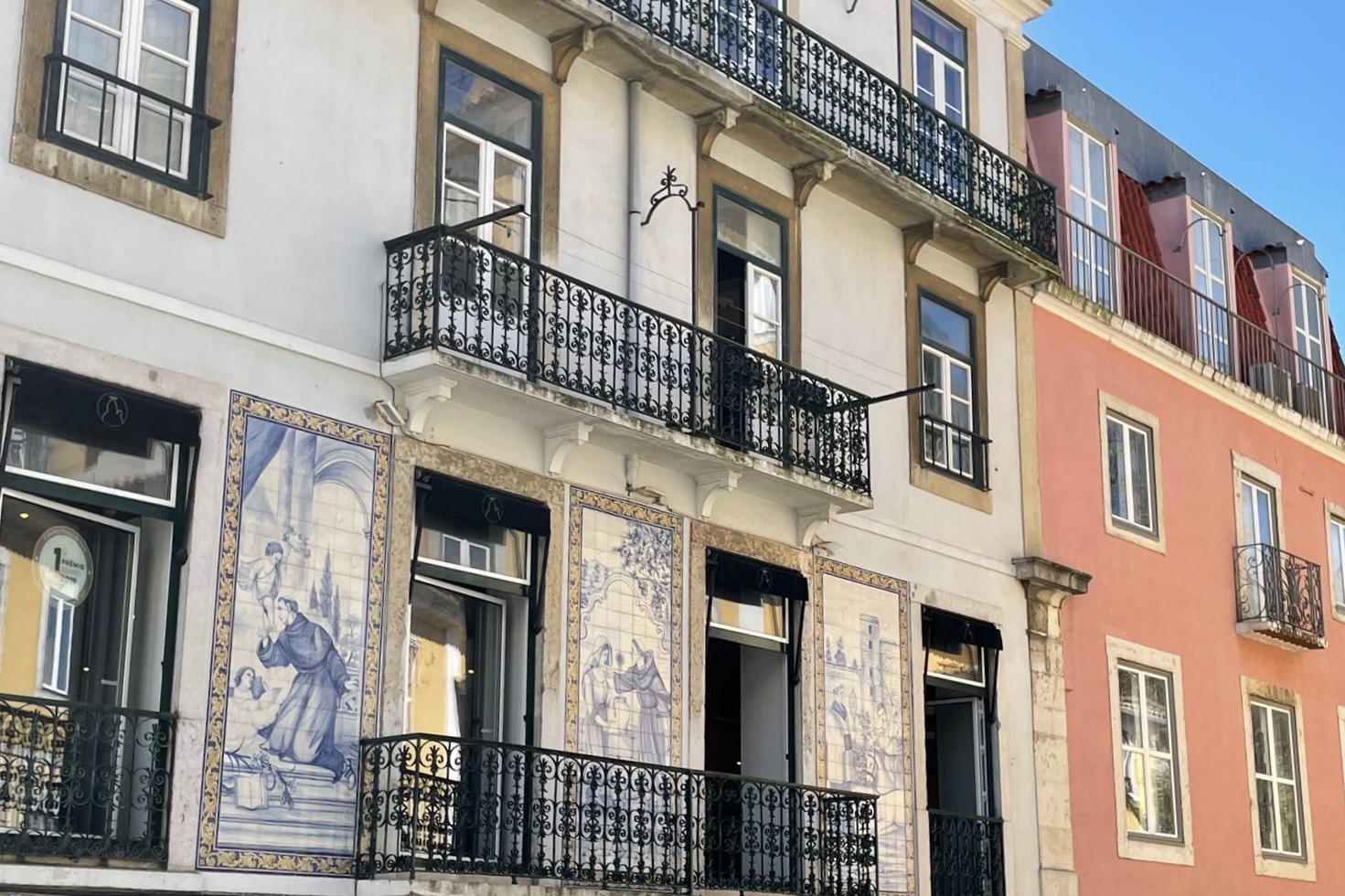
Lisbon is spread across seven hills, and that geography matters more than any guidebook lets on. Choose your base badly, and you’ll spend half the holiday climbing. Chiado, the upper district between Baixa and Bairro Alto, solves the problem neatly. It’s high enough that you walk down to most things and tram or funicular back up. It is also the cultural heart of the city, full of bookshops, theatres, and the kind of cafés where Fernando Pessoa wrote.
The Airbnb I booked was a two-bedroom on Rua Augusta, a pedestrian street, and just a minute’s walk from the Largo do Chiado and close to the top of the Santa Justa Lift. The flat was comfortable, and the owner even left a bottle of wine and recommendations for local restaurants.
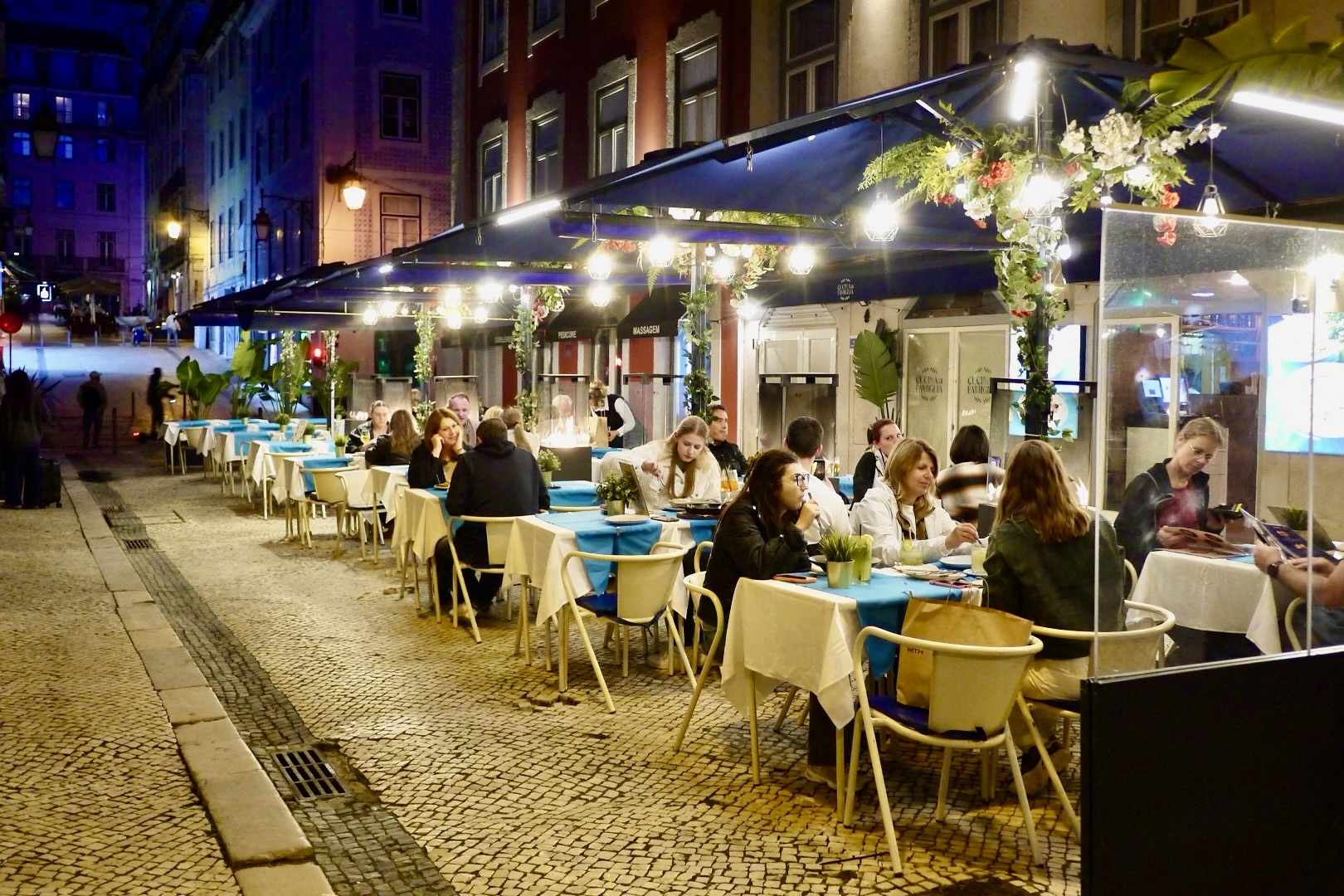
Practically, Chiado put almost everything within walking distance. Places like the Time Out Market at Mercado da Praça do Comércio, and the Castelo de São Jorge were all walkable. For the few destinations that were further, the tram stops at Praça Luís de Camões and Largo do Chiado put us on the famous Route 28 and the funicular Elevador da Bica.
Explore the Old Quarter on Foot
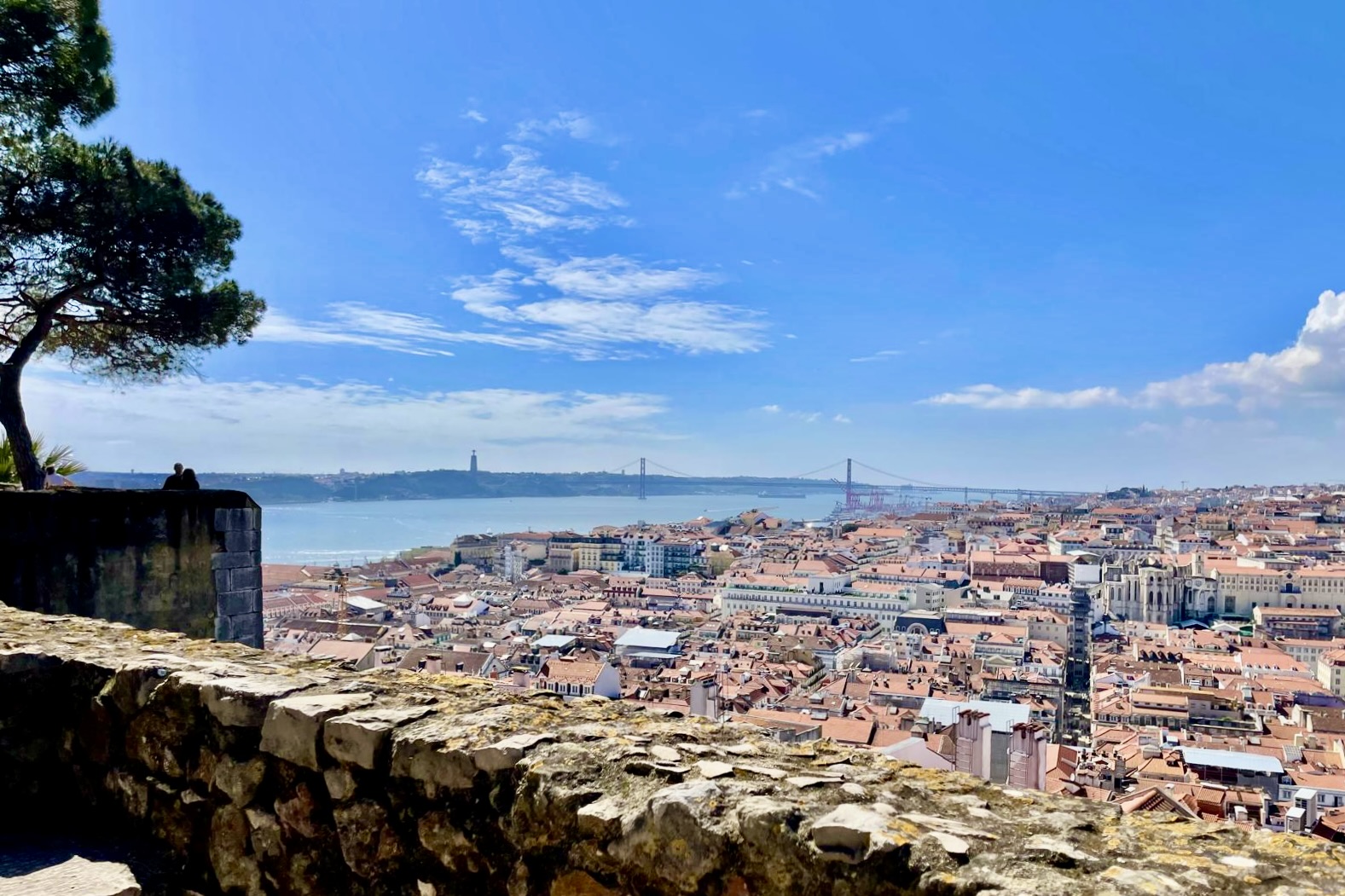
The hill above Chiado is where Lisbon begins. Castelo de São Jorge, the medieval Moorish fortress that crowns the city, is the obvious place to start. It’s about a mile from Chiado, all of it uphill. The castle gateway, restored in the 19th century and bearing the date 1846, opens onto a forecourt with café tables and umbrellas. The ramparts at the top give you that famous panoramic view of central Lisbon, with Baixa’s terracotta roofs spread out below and the 25 de Abril Bridge crossing the Tagus in the distance.
Walking back down through Alfama, the narrow streets eventually drop you at the Sé de Lisboa, the fortress-like cathedral begun in the 12th century. It is not Lisbon’s most beautiful church, but it is the oldest, and its battlemented twin towers are a useful landmark when you are lost. From the cathedral, it’s a five-minute walk to Largo de Santo António, where the Igreja de Santo António de Lisboa stands on the spot where the saint was supposedly born in 1195. The small Museu de Lisboa Santo António next door is worth a visit, too.
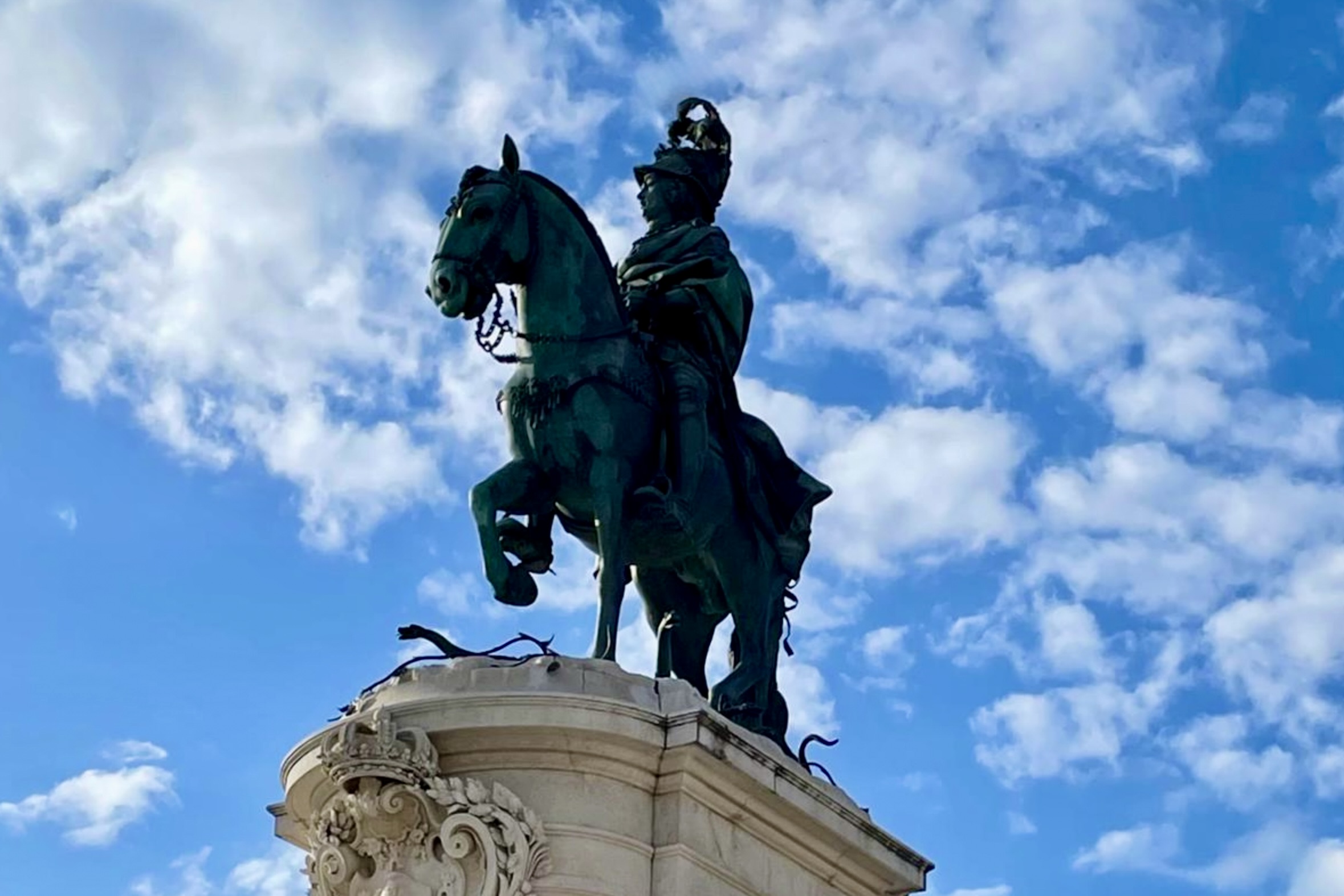
A few streets further west, Baixa opens out. This is the planned grid that the Marquês de Pombal laid out after the 1755 earthquake leveled the lower town, and it feels very different from Alfama. The grid ends at Praça do Comércio, the great arcaded square on the river, with King José I mounted on his bronze horse in the center. The triumphal Arco da Rua Augusta frames the entrance to Rua Augusta, the main pedestrian street running back into Baixa. It’s one of the loveliest urban spaces in Europe, and it costs nothing to spend an hour there.
Riding Tram 28
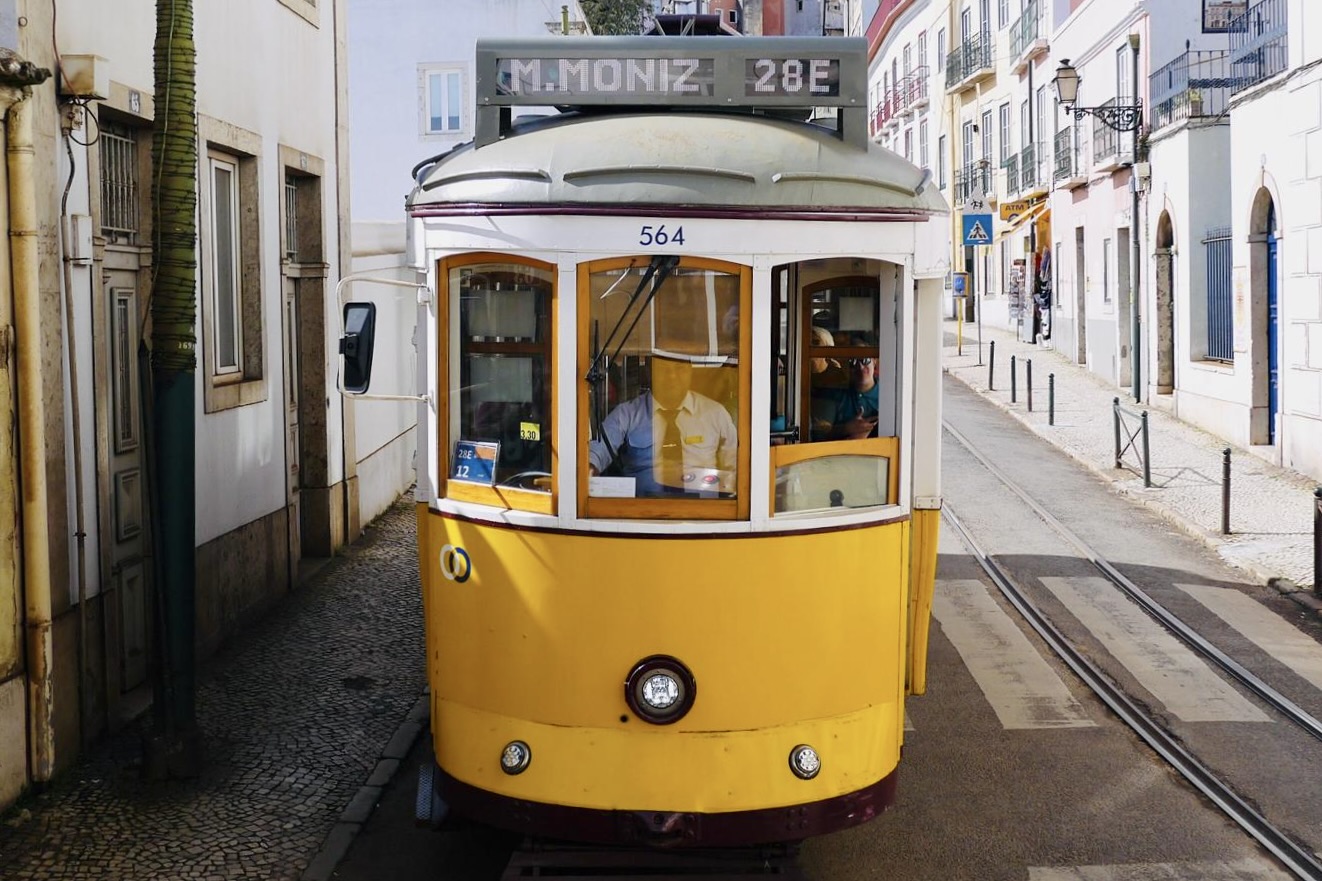
The yellow trams of Lisbon, particularly the Remodelado cars from the 1930s that still run on the historic routes, are hugely popular with tourists. Tram 28 runs from Martim Moniz, north of Baixa, through Graça, Alfama, Baixa, Chiado, and out to Campo de Ourique in the west. The route covers most of central Lisbon’s hills and corners.
The trick is to know when to ride it. Early morning, before about nine, the carriages are mostly empty, and you can claim a window seat. By midday, they’re packed, and you’ll end up standing the whole way.
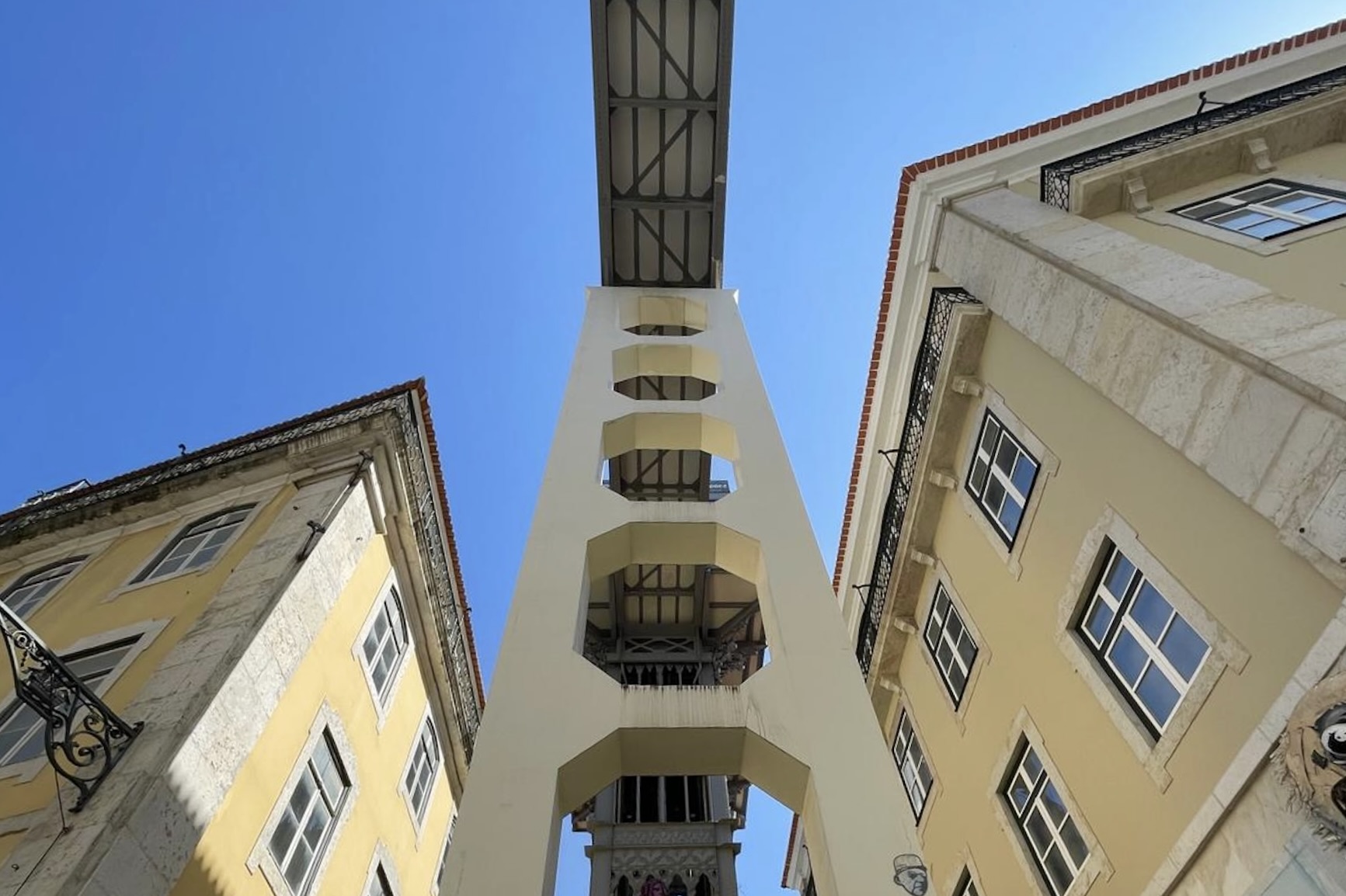
The other piece of period transport worth using is the Elevador de Santa Justa, the wrought-iron lift completed in 1902 that connects Baixa with Largo do Carmo in Chiado. The lift carries you up about 150 feet in two cabins finished in polished wood and brass. The viewing platform at the top gives you a superb panorama north over Baixa to the castle. Walk a few yards south, and you’ll find the entrance to the Convento do Carmo, the Gothic ruin whose roof collapsed in the 1755 earthquake and was never replaced.
Belém…, and Custard Tarts
Belém is the half-day excursion every Lisbon visitor needs to make. The district lies about four miles west of the city center along the river, and the simplest way to get there is the number 15 tram from Praça do Comércio. It takes about 25 minutes and drops you within sight of the main monuments.
The star attractions are the Mosteiro dos Jerónimos and the Padrão dos Descobrimentos. The monastery, begun under King Manuel I in 1501 and partly funded by the spice trade with India, is one of the great examples of the Manueline style, all carved limestone columns, ribbed vaulting, and rope-motif ornament. The cloisters are quieter than the church and are the more memorable visit.
A few hundred yards along the riverside walkway, the Padrão dos Descobrimentos, the Monument to the Discoveries, was built in 1960 for the 500th anniversary of Henry the Navigator’s death, and the line of explorers, cartographers, and missionaries carved along its flanks reads like a who’s who of the Portuguese Age of Discovery. From the river path, the view back across to the 25 de Abril Bridge and the Cristo Rei statue on the south bank is one of the best in Lisbon.
The other reason to come to Belém is the pastel de nata. The custard tart is a Lisbon staple, but the originals are made at Pastéis de Belém, a few minutes’ walk from the monastery. They use a recipe held by the same family since 1837, which is supposedly kept under lock and key. The queue moves quickly as most people take their tarts to go. Even if you can’t make it to Pastéis de Belém (or it’s too busy), this popular sweet treat is available everywhere around Lisbon.
A Day Trip to Sintra and Cabo da Roca
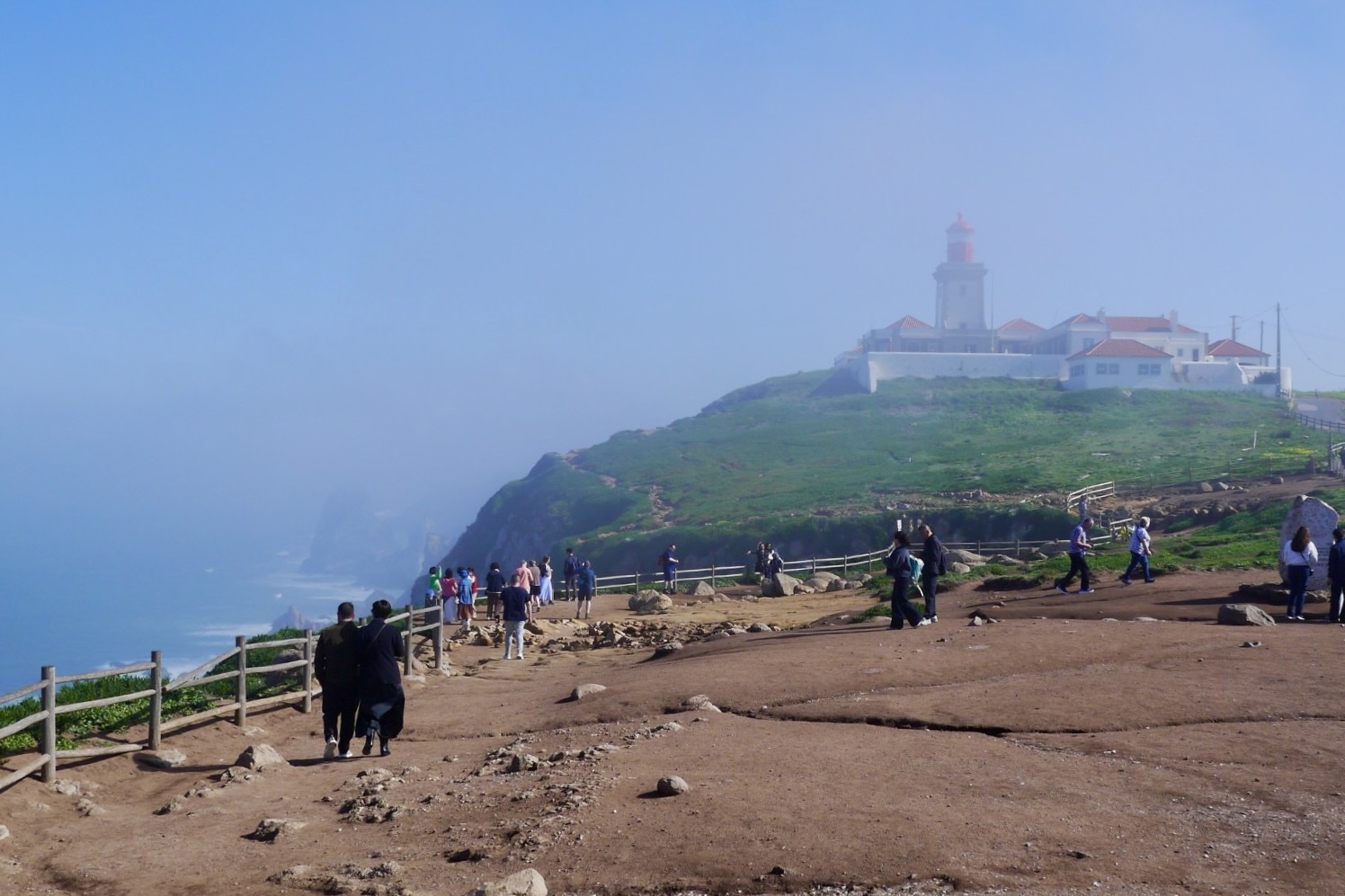
I decided the easiest way to experience Sintra was via an organized tour from Lisbon; a 40-minute train ride will get you there if you go it alone.
Our first stop was the westernmost point of mainland Europe, Cabo da Roca (Cape Rosa). Here, the cliffs drop dramatically 460 feet to the Atlantic, the wind never stops, and the stone marker quotes the poet Luís de Camões: where the land ends and the sea begins.
Next stop: Sintra. Sintra is located in the wooded hills about 17 miles west of Lisbon. However you get there, it’s easy to see why Lord Byron called it a “glorious Eden” as the microclimate here keeps the hills green and damp, while Lisbon is dry.
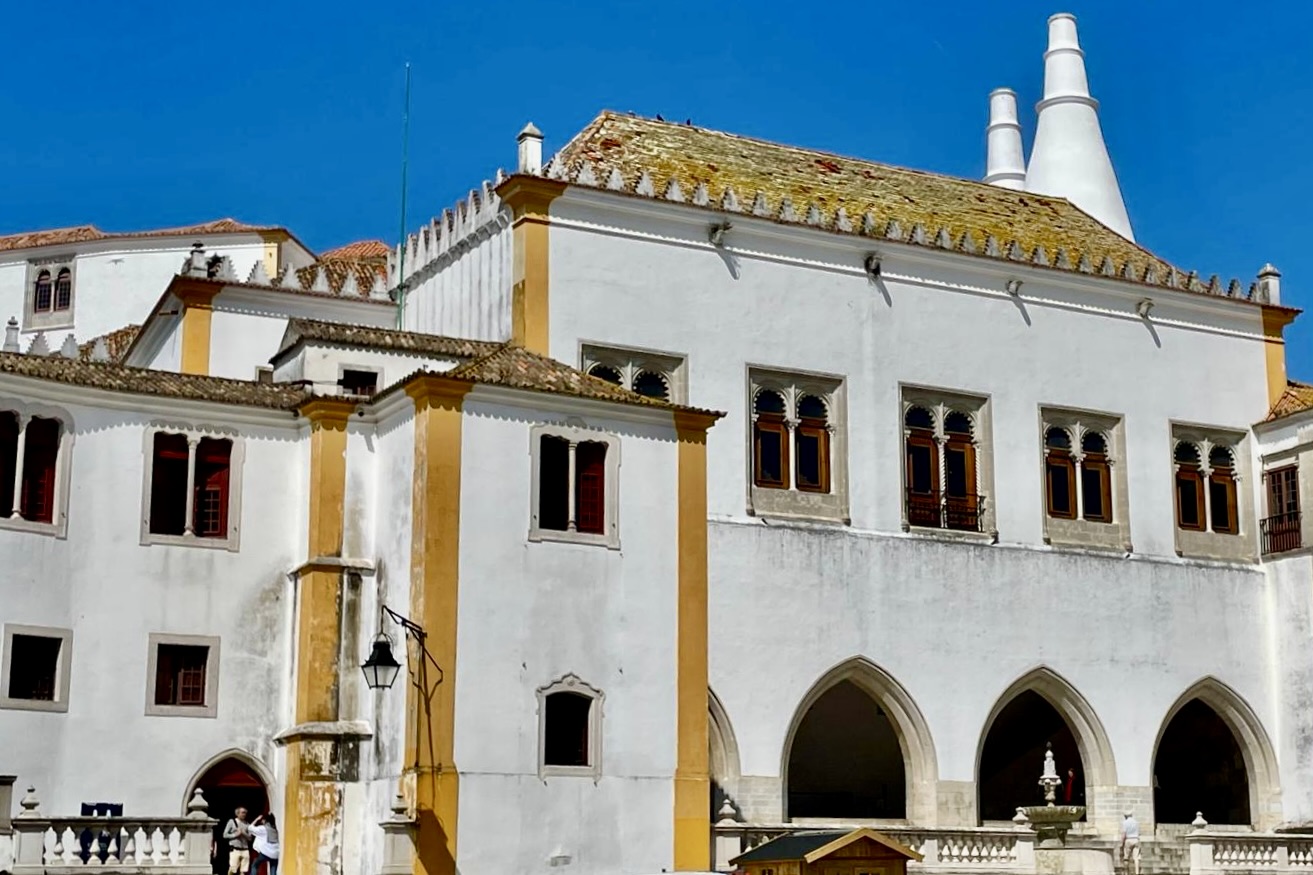
The Portuguese royal family used Sintra as a summer escape from the heat of the capital for 600 years, and the buildings they left behind cover most of those centuries. We started at the Palácio Nacional de Sintra, the town palace. It’s easy to spot by the two enormous white conical chimneys that rise from its medieval kitchen, and is the oldest surviving royal residence in Portugal, with Moorish, Gothic, and Manueline influences.
From here, head to the Palácio da Pena, the 19th-century Romantic palace that King Ferdinand II had constructed on the highest peak in the Sintra hills. Built between 1842 and 1854, the yellow towers, lilac tile work, Moorish-revival arches, and Manueline detailing make Pena look like several different buildings stuck together, which is more or less what it is.
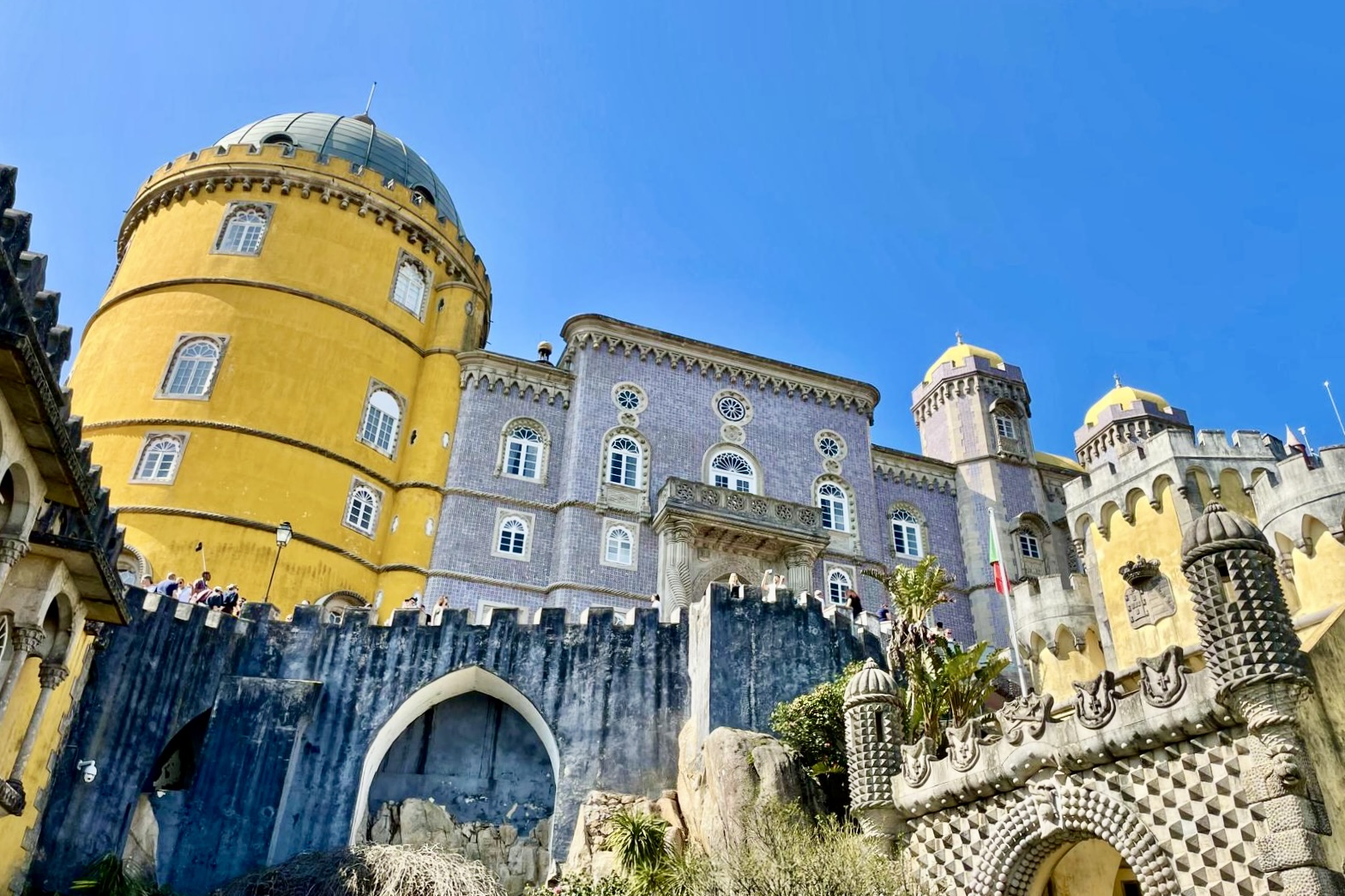
The view from the terraces stretches all the way back to Lisbon on a clear day, and the gardens below the palace are a small forest of camellias and tree ferns.
We also had lunch in Sintra, which included a glass of ginjinha. Portugal’s sour-cherry liqueur is served in a small chocolate cup that you drink from and then eat.
Our final stop was Cascais, the old fishing town turned royal resort. Here we walked around the marina with its working boats and pleasure yachts before heading back to Lisbon.
Food and Drink Experiences in Lisbon

Lisbon’s food and drink scene is now one of the best in Europe. Time Out Market Lisboa at the Mercado da Ribeira in Cais do Sodré is a must for foodies. A converted 19th-century market hall that gathers around 40 stalls from named Lisbon chefs and restaurants under one wrought-iron and glass roof.
For wine buffs, the big-name Douro reds, made from native grapes like touriga nacional and tinta roriz in the steeply terraced vineyards upriver from Porto, are made for slow drinking. Vinho verde from the Minho region in the far north is the opposite: light, slightly fizzy, low in alcohol, and made for hot afternoons. The Alentejo wines, from the plains south of Lisbon, fall somewhere in between.
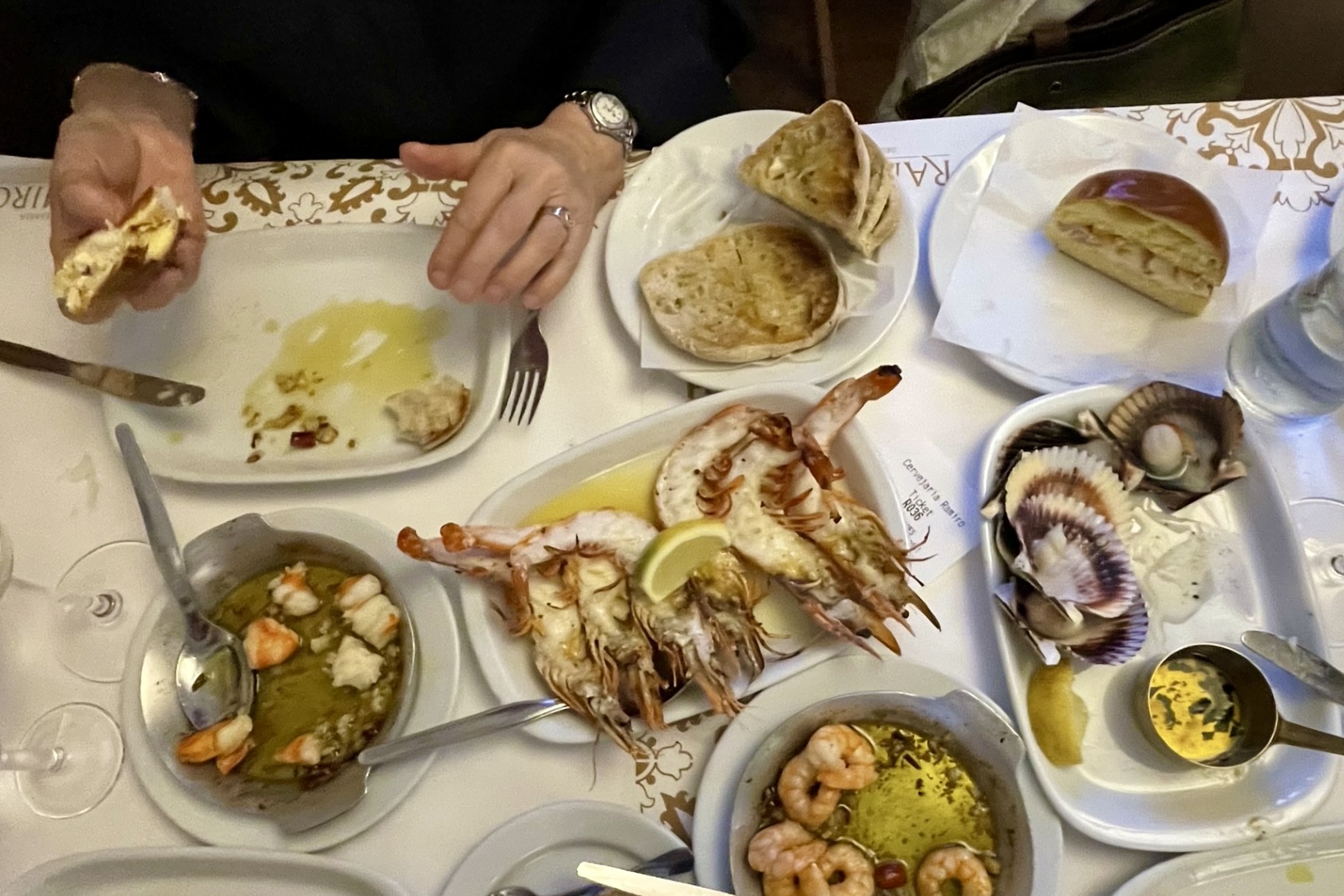
For our last meal, we chose to dine at what is undoubtedly one of the best restaurants in Lisbon: Cervejaria Ramiro, on Avenida Almirante Reis. Ramiro has been serving seafood in Lisbon since 1956 and was a favorite of the late Anthony Bourdain, which means the queue starts forming early (book ahead to avoid disappointment). You get a numbered ticket, but once seated, the kitchen moves quickly.
Enjoy a Traditional Fado Performance
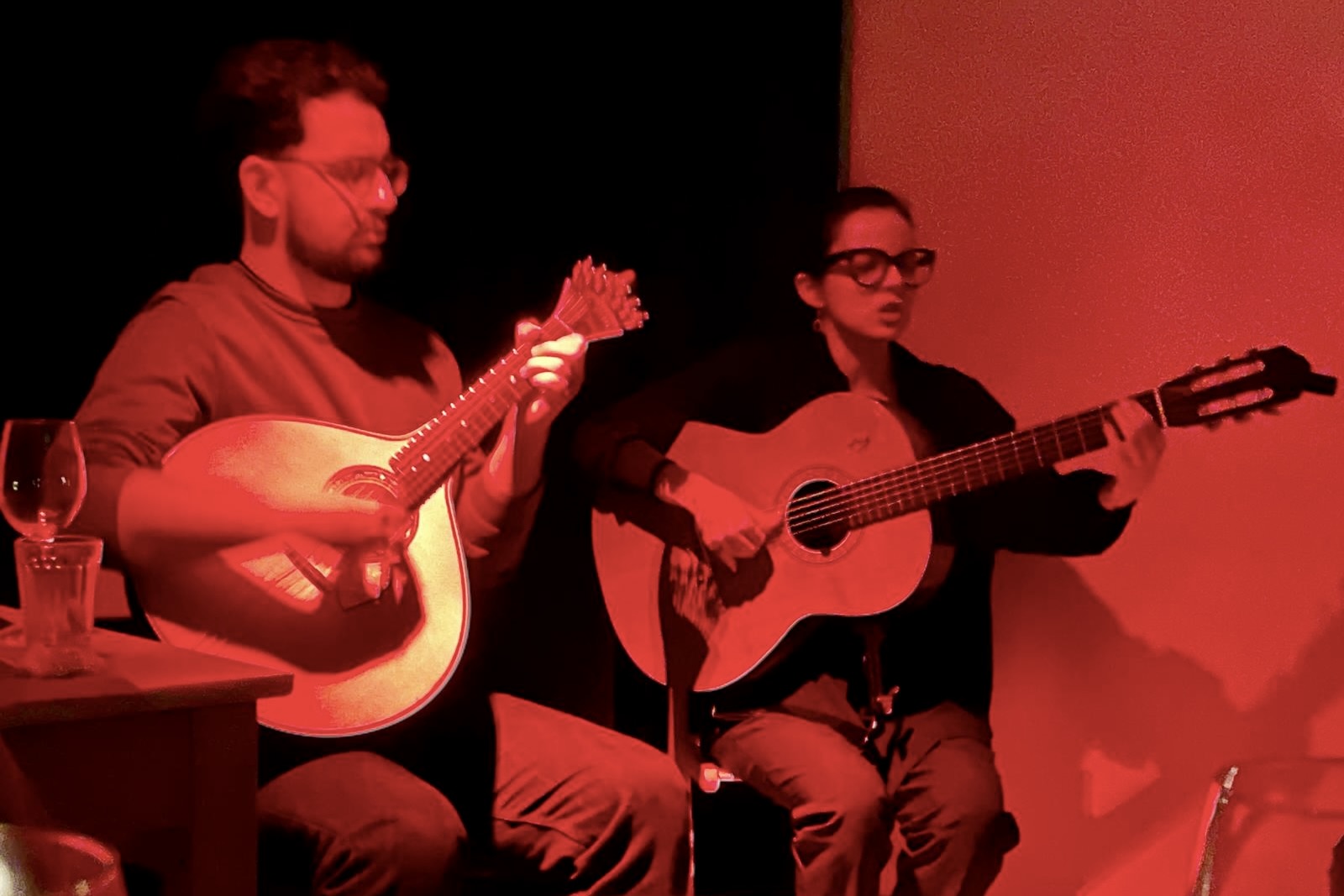
If time allows, I would highly recommend spending an evening listening to the haunting sounds of Fado, Portugal’s traditional and emotional style of music, often based on feelings of longing, fate, and nostalgia.
It is usually performed in small taverns and candlelit restaurants, and accompanied by the distinctive sound of the Portuguese guitar. The performers demand complete silence from the audience, making the experience feel intensely personal.
Following a recommendation by the housekeeper at our Airbnb, we returned to the Alfama district for an intimate supper and a Fado performance in a tiny restaurant, tucked down one of the many narrow streets. By the end of the evening, it was just the two musicians and us making the whole experience feel even more special and one of the most memorable moments of our time in Lisbon.
The Concert at the Coliseu dos Recreios
The reason for the trip, in the end, was a Tuesday evening at the Coliseu dos Recreios on Rua das Portas de Santo Antão, a few minutes’ walk uphill from Rossio. The venue opened in 1890, was built around an 82-foot iron dome shipped in from Germany, and has hosted everything from circuses to operas to rock concerts in the 136 years since.
Ludovico Einaudi played a solo piano set with no support act, no interval, and almost no spoken introduction. He walked on stage, sat at the piano, and played. For anyone who has not seen Einaudi live, the show is built on his minimalist piano compositions from albums like I Giorni, In a Time Lapse, and the more recent Underwater.
If you can plan a city break around a single concert in a venue like this, the trip pays for itself before you have even left the hotel. Or, in my case, the Airbnb.
Tips and Tactics
Here’s what I learned during my five days in Lisbon: have a read, book a concert and a visit, and have fun.
- Cervejaria Ramiro takes reservations on its website, but the queue system is part of the experience, and arriving without a booking around 6.30 pm is fine. Ask to be seated upstairs if you can. The menu is priced by weight (per kilogram, which works out at a little over two pounds), which catches British and American visitors out, so ask the waiter to estimate before you order.
- For the Coliseu dos Recreios, tickets for big names sell out fast. Sign up for the venue’s mailing list at com for advance notice. The seated boxes have the best acoustics, but the standing gallery on the top floor is the cheapest seat in the house, and the view of the dome from up there is worth the price on its own.
- How to Get There: Lisbon is served by Humberto Delgado Airport (LIS), three miles north of the city center. Direct flights from most UK airports take two and a half to three hours, with TAP Air Portugal, easyJet, Ryanair, and British Airways all running daily services. Flights from Canada and the United States are also frequent.
- From the airport, the red metro line takes you into central Lisbon for one euro eighty and a change at Alameda onto the green line for Chiado. A taxi to Chiado is around fifteen to twenty euros, depending on traffic.
- To get around once in Lisbon, a Viva Viagem card (loaded with the 24-hour pass) covers metros, trams, buses, the funiculars, and the Santa Justa Lift. Buy it from any metro station ticket machine.
- Trains to Sintra leave from Rossio station; trains to Belém leave from Cais do Sodré, although the number 15 tram from Praça do Comércio is the more scenic option.
___________________
Deb Jones is a travel writer who covers cities, culture, and luxury experiences for LuxuryUK. This was her first visit to Lisbon.